

Performance sport
The excellent facilities in the new Lärchenplatz building provide an ideal environment for both applied research and modern services with a high degree of practical relevance. Record numbers of tests, interdisciplinary support and innovative projects contribute to improving quality, personalisation and prevention in Swiss performance sport. The findings are also incorporated into teaching and applied in grassroots sport.
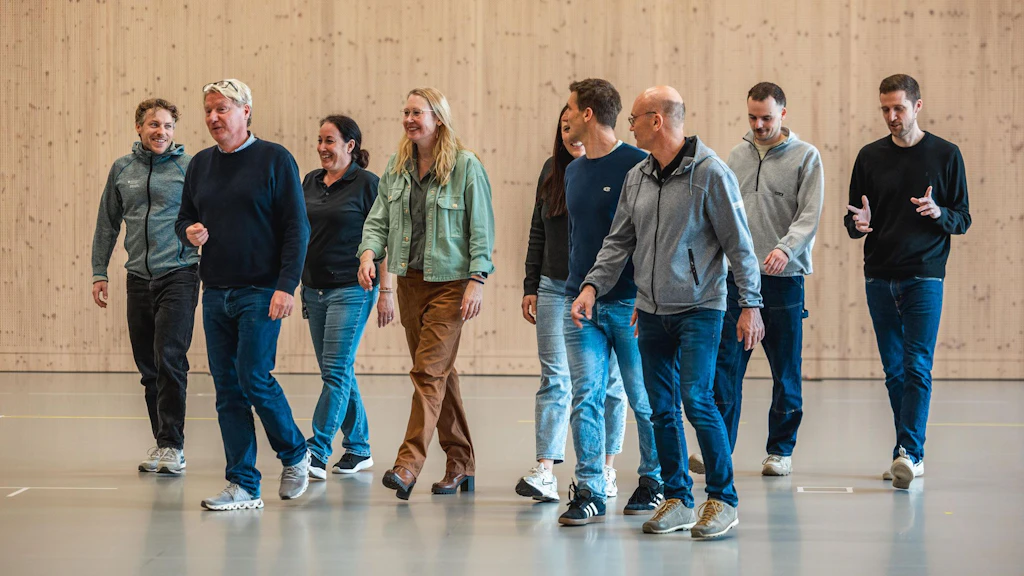
Modern services: Focus on athletes
The Performance Sport Department at the SFISM consistently tailors its services to the needs of athletes. The focus is on providing holistic support and evidence-based, practical solutions throughout an athlete’s career.
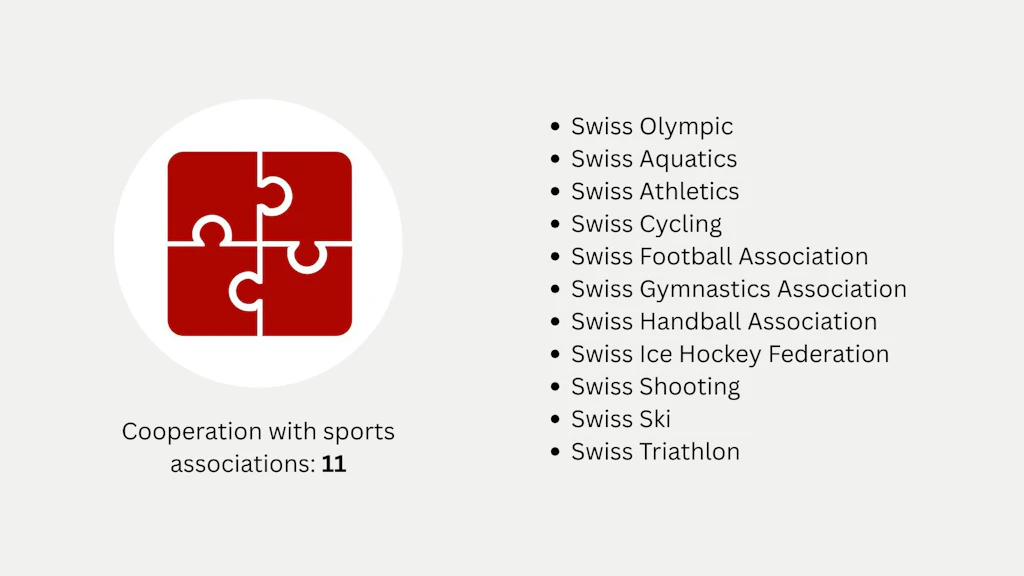
Key highlights included support for the women’s national football team ahead of the UEFA Women’s EURO in Switzerland, and the intensification and expansion of our partnership with Swiss Ski across various disciplines.
Training, testing, developing — Women’s football enjoys home advantage in Magglingen
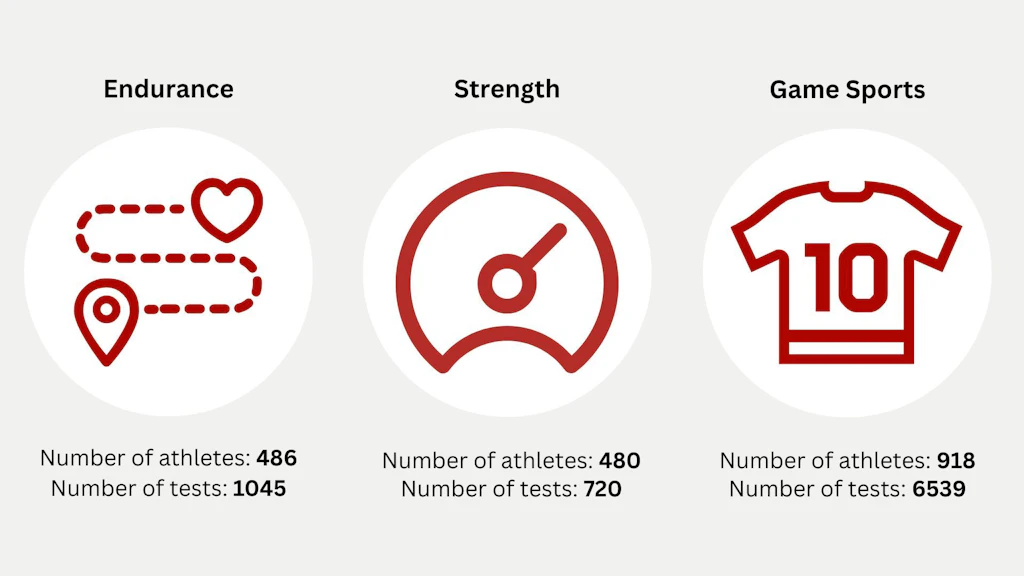
Record number of performance tests
In 2025, a record number of performance tests in strength and team sports were performed. The Endurance Unit also carried out a consistently high number of performance tests in the new laboratories.
By streamlining processes and focusing on sports medicine, we were able to further improve the high-quality care provided to high performance athletes. The very high workload in sports physiotherapy is primarily due to the increasing provision of rehabilitation and preventive care for athletes in the Armed Forces’ and associations’ elite sports programmes.
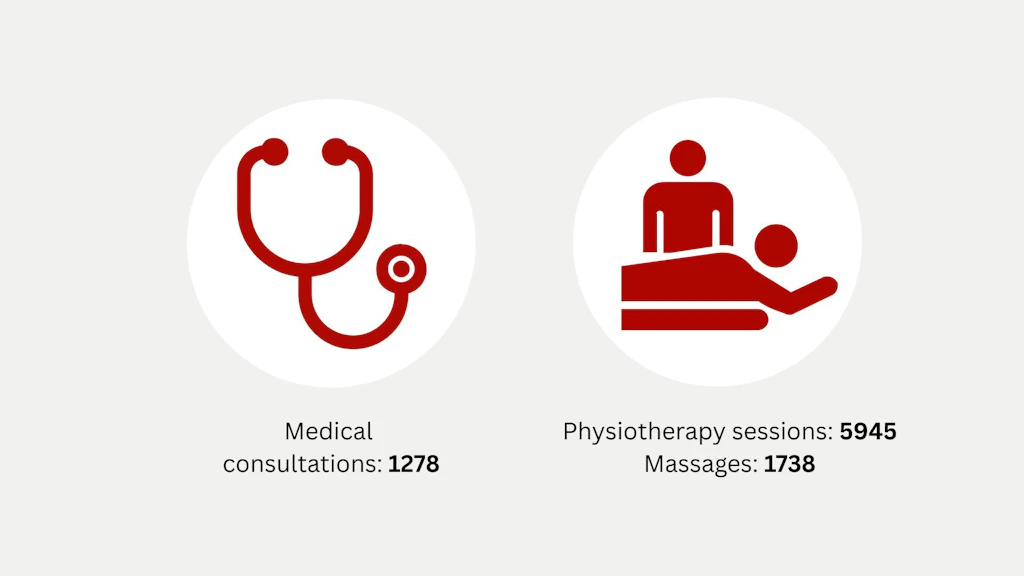
There was a change in the head of unit: Stephan Meyer, who built up and managed the wide range of sports physiotherapy services over the past 30 years, handed over to Simon Trachsel.
Interprofessional cooperation: Personalised support
A key focus was the structured introduction and implementation of interprofessional cooperation (IPC). This enables a multidisciplinary, athlete-centred approach to care, particularly in challenging situations such as complex rehabilitation processes or acute crises. This has led to improved decision-making processes and more sustainable care solutions.
At the same time, new services were developed and existing ones further expanded. These include goalkeeper-specific testing procedures, in-depth performance analyses in sprinting disciplines, and the use of AI-based evaluation methods in sports psychology. In addition, a screening tool to systematically assess mental health was developed in collaboration with partners and successfully applied. These innovations improve personalisation and precision in care.
A swarm of national team goalkeepers at Lärchenplatz (in German, French or Italian)
Cooperation with partner organisations has been further developed and strengthened, both at a strategic and operational level. The Basketball Association now supports young players who train and live at the National Basketball Centre in Magglingen.
Basketball above Lake Biel: Will the next NBA star come from Magglingen? (in German, French or Italian)
Applied research
The expansion of infrastructure, in particular the new Lärchenplatz laboratories, has created extra capacity for making precise measurements and conducting applied research, thereby also boosting innovation and knowledge transfer in the Swiss sports system.
The programme focuses on sustainable performance development, injury prevention, performance assessment, recovery, mental health and the further development of sport-specific methods.
Women in performance sport: Filling the research gap
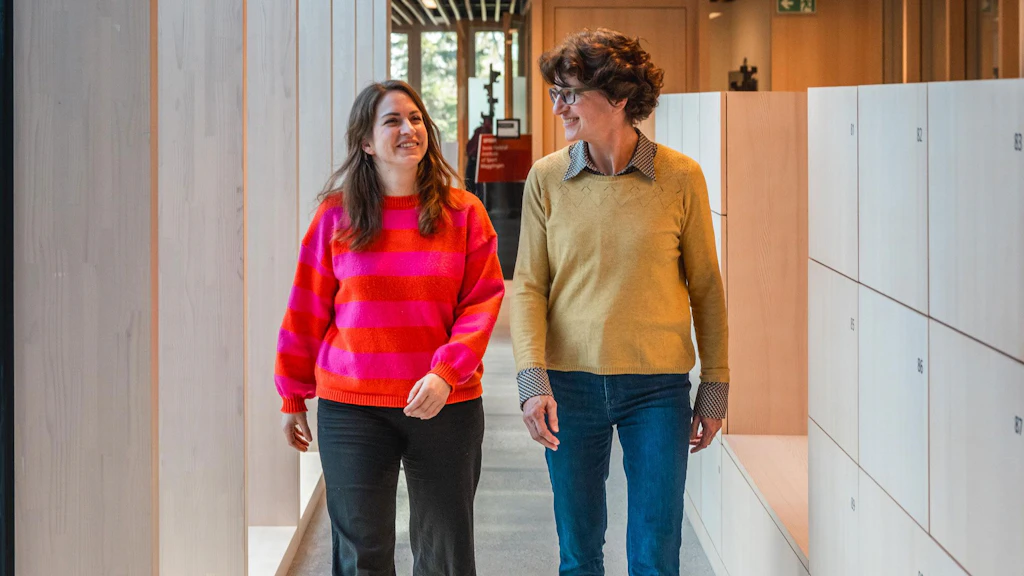
We place a strategic focus women in performance sport, particularly given the significant gap in research. Only a small proportion of the studies conducted to date on biopsychosocial developments in elite sport have looked at women. The Women in Performance Sport working group, in consultation with Swiss Olympic, coordinates activities across the field, promotes research and development specific to women, and fosters an environment in which female athletes are valued. This, in turn, enourages high performance and good health.
The ‘How much is enough?’ study accompanied young female footballers for twelve months to establish and better understand the link between training load, everyday stress, regeneration, health and performance development with the aim of improving prevention and care.
Another example is the recently concluded Testo study, which investigated the hormonal responses of female performance athletes in resistance training. On the basis of a comprehensive hormone profile, the study analysed the short-term effect of resistance training on levels of stress and metabolic hormones. The findings of the study, which was funded by Swiss Olympic, help to provide a more nuanced understanding of the acute physiological responses and potential adaptation mechanisms in women engaging in resistance training.
Testo study: Acute Adrenal Suppression Following Resistance Training in Elite Female Athletes: A Comprehensive Steroid Profile, MDPI
Young academics in focus
In 2025, 12 PhD students were supervised and two PhDs were successfully completed.
Dr Nadja Ackeret
Dr Nadja Ackeret investigated how self-compassion and social support contribute to the mental health of coaches and young athletes in performance sport.
- Factors contributing to elite athletes’ mental health in the junior-to-senior transition: A mixed-methods study, SFISM project database
- Positive mental health among sports coaches: A six-month longitudinal study, SFISM project database
- Six-month stability of individual differences in sports coaches’ burnout, self-compassion and social support, SFISM project database
Dr Mirjam Hintermann
In her doctoral thesis, Dr Mirjam Hintermann examined scanning behaviour in women’s youth football as a key perceptual-cognitive skill for assessing game situations, anticipating the movements of teammates and opponents, and making decisions under time pressure.
- The influence of scanning behaviour on performance during 4v4 small-sided games in youth female football, Taylor & Francis
- Optimizing Scanning in Youth Female Football: The Role of Verbal Instructions, PubMed
- ‘Heads Up Girls!’ A training intervention to improve scanning behavior in youth female football, Frontiers
Applying scientific findings to teaching and grassroots sport
In addition to research and service provision, the Performance Sport unit aims to systematically integrate scientific findings into teaching, training, coaching practice and the Swiss sports system, thereby creating lasting benefits for performance sport, youth sport and grassroots sport.
Power to win: Improving neuromuscular performance
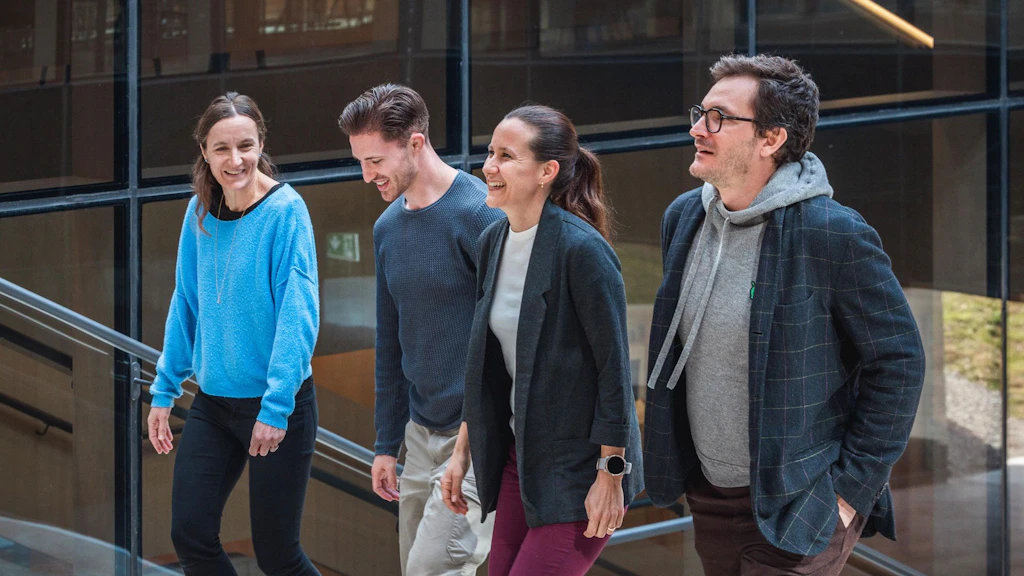
The interdisciplinary Power to Win project was run in collaboration with several sports associations and Swiss Olympic. The aim is to raise coaches’ awareness of the importance of neuromuscular performance in youth performance sport and to provide evidence-based training content. The models, learning modules and exercise programmes developed are incorporated directly into the SFISM degree syllabus, the Sports Coach Education Switzerland programmes, Y+S programmes and PE teacher education. They are also used in children’s and youth sport and in health promotion.
Power to Win, mobilesport.ch (in German, French or Italian)
Play more football: Developing quality in youth and grassroots sport
A second focus was the Play More Football project, which promotes a child-friendly and development-oriented approach to youth soccer. Drawing on scientific research on motivation, learning, and physical stress, game formats were developed that encourage greater participation, physical activity and enjoyment, thereby reducing dropout rates. These findings are incorporated into teaching on Master’s programmes, Y+S programmes, sports coach education and training run by associations, and are widely implemented throughout the Swiss sports system.
The project also received international recognition: Teaching and Sports Education
- Play More Football research project (in German)
- Grassroots Award: SFISM children’s football project wins international award (in German or French)
SFISM Annual Report 2025
Annual Report 2025
This year the SFISM is publishing its annual report in digital format only. The report showcases key themes that shaped the SFISM in 2025 and illustrates the key figures with clear graphics.

Core topics in 2025
In 2025, the SFISM focused on strategic development. The aim was to clarify the institute’s role within the changing landscape of sport, higher education and public administration, and to set clear priorities.

Education and Continuing Professional Development
The SFISM continued to develop its range of courses. The newly restructured Bachelor’s degree programme in Sports Science and new continuing professional development (CPD) courses strengthen the institution’s academic foundation.

Teaching and Sports Education
The SFISM works actively to promote diversity, inclusion and equal opportunities. Practical teaching materials on ethics in sport encourage responsible behaviour.

Sports Economics
The Sports Economics department focused on continuing professional development and consultancy services. The publication of the textbook entitled Sport Management in Europe was one of the year’s highlights.

Sports coach education
In 2025, the focus was on preparations for the Olympic and Paralympic Games, and on continuing to develop the framework conditions and course formats.
Eidgenössische Hochschule für Sport Magglingen EHSM
Hauptstrasse 247
2532 Magglingen