

Performance tests in football: fair, personalised, development-focused
Julia Hernandez is a PhD student in the Department of Exercise Science at the SFISM; she is also a passionate footballer. She is investigating how performance tests in youth football can be made fairer, more personalised and more development-oriented.
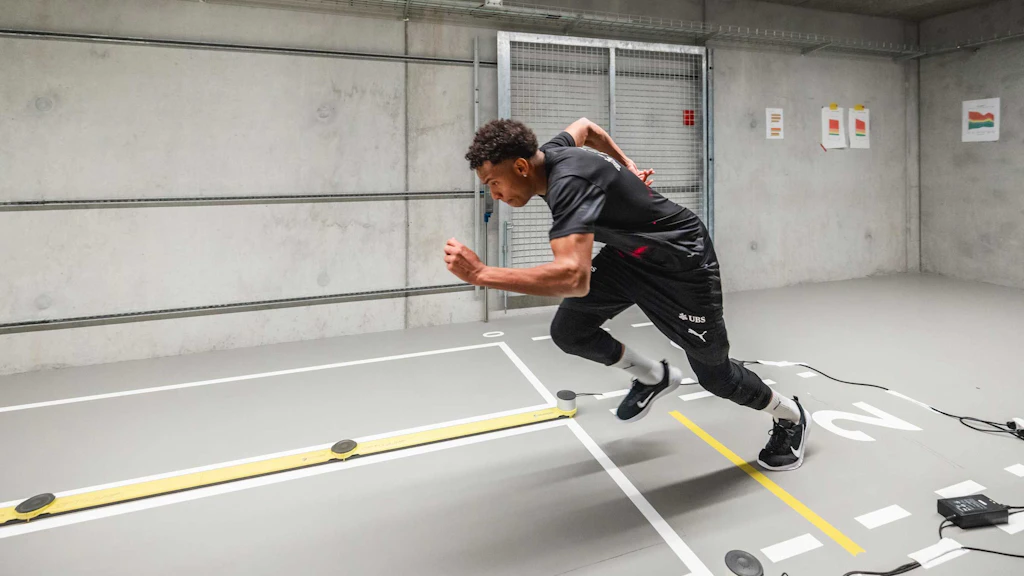
Children and adolescents develop at different speeds. While some mature early, others are significantly behind in their physical development, even though they are the same age. As a result, their results in athletic performance tests are not directly comparable.
Taking biological age into account in performance appraisals
Julia Hernandez’s main focus is on supporting talented young players. She believes that in order to make performance tests fairer, they should take account not only of chronological age but also of biological age. The idea for the project was developed in collaboration with the Swiss Football Association.
In her research project, she analyses 10-metre sprint performance in elite youth football – and in doing so, asks a crucial question: to what extent does the parameter of chronological age skew performance assessments in youth football? Because, while chronological age simply takes a person’s date of birth into account, biological age reflects where a child or adolescent actually stands in their development. Between the ages of 10 and 13 in particular, when most children experience a growth spurt during puberty, there can be a biological gap of two or more years between children of the same age – with significant implications for identifying and selecting talent.
The Football Association provided Julia with a large volume of data for her research. Using this, she was able to analyse where the young players were at a particular stage in their development: How does the assessment of 10-metre sprint performance change when biological age is taken into account rather than chronological age? She also examined how assessments of performance development change over the years when the individual physical development trajectories of young players are factored in.
Making youth development more effective
The results have clearly shown that taking biological age into account significantly alters performance assessments in youth football. Players who developed later improved their performance rankings significantly when their sprint performance was assessed relative to their biological age. In contrast, children and young people who had developed early were assessed more realistically and, in some cases, lost the high rankings they had previously held, which had been largely attributable to their advantage in physical development.
Furthermore, Julia Hernandez’s research has highlighted how differently the performance of young talent develops over the years. Some make rapid progress, while others improve more slowly, regardless of their starting level. What is especially relevant is that players whose sprinting performance was initially weaker often showed greater improvements in performance than those who were already very fast.
These results are of crucial importance when it comes to developing young talent in Swiss football: By factoring in their biological age, young players can be assessed more fairly. By taking their individual development into account, even late bloomers can remain within the support system. This will provide the Association with a more nuanced basis for decision-making when it comes to the targeted development of young footballers.
Profile
Julia Hernandez graduated with a master’s degree in Sports Science Research from the University of Bern. Following various internships and roles as a research assistant, she is currently pursuing a PhD at the Swiss Federal Institute of Sport in Magglingen and the University of Fribourg.
Profile Julia Hernandez, SFISM Project and Publications Database
Further information
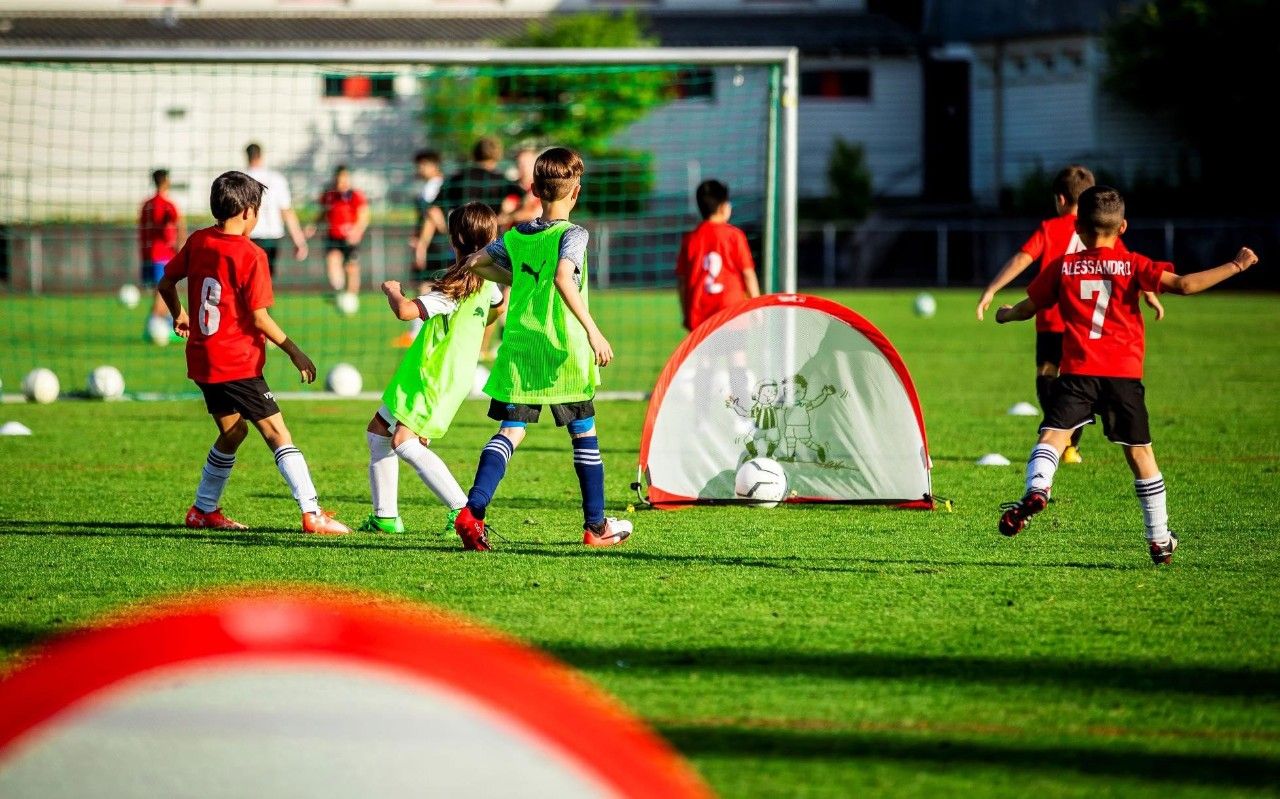.jpeg?rect=0%2C40%2C1280%2C720&w=1024&auto=format)
Talente im Fussball besser fördern und erkennen
Kinder und Jugendliche entwickeln sich in unterschiedlichem Tempo. Gemeinsam mit Swiss Olympic und dem Schweizerischen Fussballverband (SFV) hat die Eidgenössische Hochschule für Sport Magglingen EHSM das Spielformat «Bio-Banding» untersucht. Mittlerweile hilft Bio-Banding dem SFV dabei, keine Talente mehr zu übersehen.

Exercise Science
Exercise Science conducts research in the field of talent identification, talent development as well as long-term performance development.

The effects of ageing in sport: biological age and stage of development
During puberty, there are significant differences in the biological stage of development among athletes. This plays a major role in talent selection. (In German)