

Mental training using neurofeedback and VR
In an interdisciplinary research project, neuroscientists and sports psychologists are investigating how and whether mental training using pupil-based neurofeedback works in a virtual reality environment. The aim is to scientifically demonstrate the effectiveness of this newly developed approach to mental training.
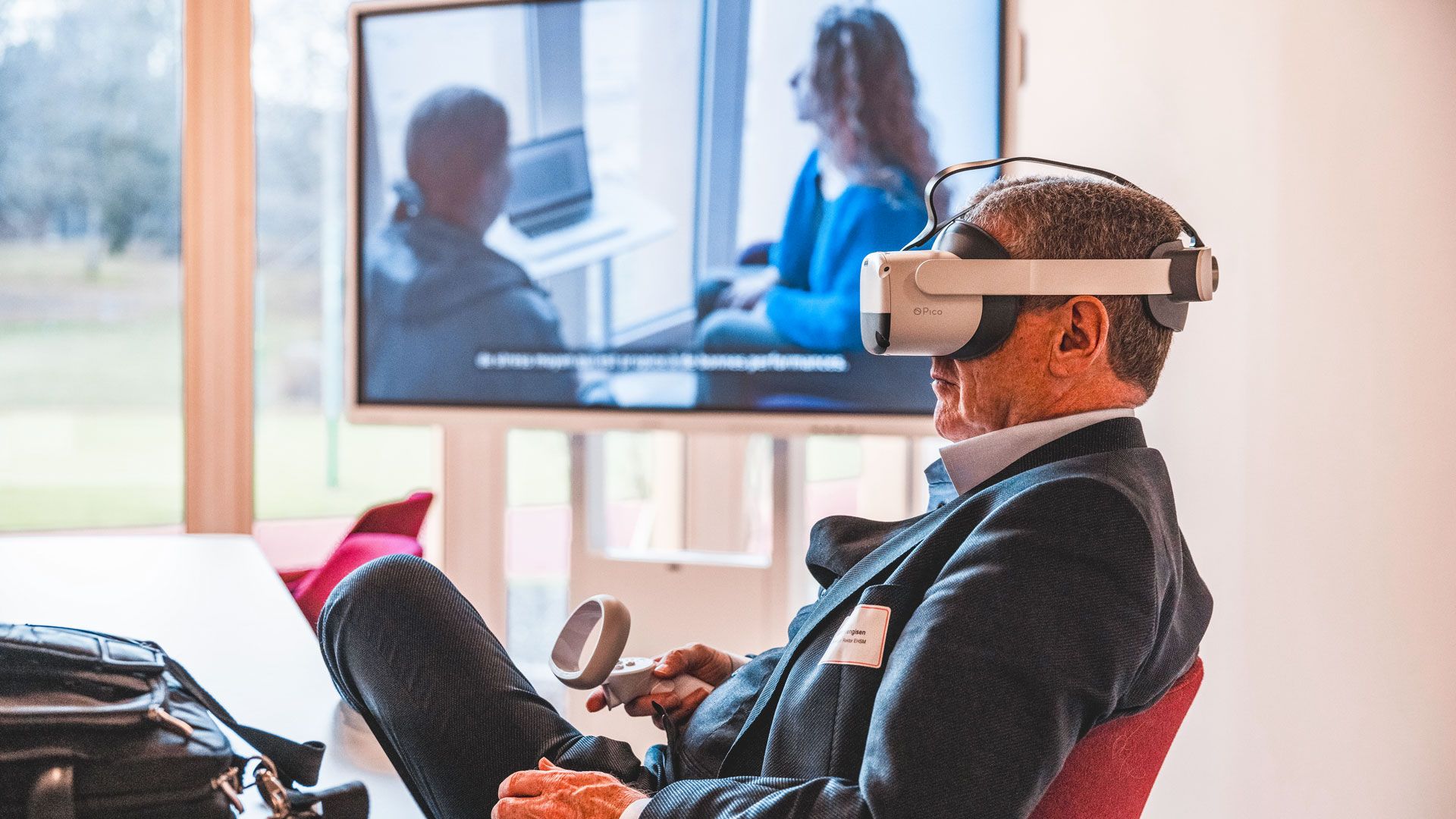
This new method is intended to enhance athletes’ performance and boost their regeneration while sleeping. The research project entitled ‹Advanced mental training for arousal-regulation using pupil-based neurofeedback and virtual reality› has received around CHF 1.2 million in funding from the BRIDGE – Discovery funding programme (November 2022 to October 2025). The scheme run by the Swiss National Science Foundation (SNSF) and Innosuisse finances projects between basic research and innovation helping to accelerate the transfer of research findings to the economy and society.
Aim of the research project
At present, no real technology is available that enables the reliable and rapid measurement and regulation of central nervous system (CNS) arousal levels in humans. However, colleagues at ETH Zurich (Meissner et al., 2023) have been able to show under laboratory conditions that the locus coeruleus, an important arousal centre of the brain, can be made accessible to voluntary control. Based on these laboratory results, the researchers are currently investigating whether athletes can learn to specifically regulate pupil size. The system is being implemented with the help of VR headsets in order to increase its applicability in practice, as the precise measurement of changes in pupil size is dependent on stable lighting conditions. The neuroscientists and sports psychologists involved in the project are investigating whether the method is effective, how it can be used in mental training and whether its impact on athletic performance can be demonstrated.
Scientific and social applications
The project aims to validate a new neurofeedback method for mental training and bring it to market maturity. The method is relevant for all fields of application that require a high level of mental resilience and good stress management, e.g. recurring pressure situations in elite sport, in the emergency room, intensive care unit, police or military.
The SFISM is supporting the ETH spin-off MindMetrix, which was founded to market the product, in testing the product under the brand name myflow, and adapting it to the needs of coaches and athletes from various sports.
Project heads
- Prof. Nicole Wenderoth, Neural Control of Movement Lab D-HEST ETH Zurich, responsible for basic research aspects of the project
- Daniel Birrer, Swiss Federal Institute of Sport Magglingen SFISM, responsible for sport-specific applications
Citation: Meissner, S. N., Bächinger, M., Kikkert, S., Imhof, J., Missura, S., Carro Dominguez, M., & Wenderoth, N. (2023). Self-regulating arousal via pupil-based biofeedback. Nature Human Behaviour, 1–20.
Swiss Federal Institute of Sport Magglingen SFISM
Hauptstrasse 247
2532 Magglingen