

How is the mental health of Swiss elite athletes?
The broad-based research project supported by the Swiss National Science Foundation (SNSF) "Understanding and promoting mental health of competitive athletes" aims to learn more about the mental health of Switzerland's elite athletes. The three-year project commenced in 2022 under the leadership of sports psychology researcher Dr Philipp Röthlin. How is the project coming along?
.jpeg?auto=format)
The «Mental health of competitive athletes» project has been running for a good five months now. How is it going?
Philipp Röthlin (PR): The project got off to a good start, thanks, and is going according to plan. The first two studies will lay the groundwork for the project: firstly with a snapshot of the current mental health of Swiss athletes, and secondly what the various sports associations are doing to improve the mental health of sportspeople. A survey is being conducted for the first study, for which we have already received around 1000 responses – which is very good. The second study is still at the preparatory stage.
Who's involved in the project?
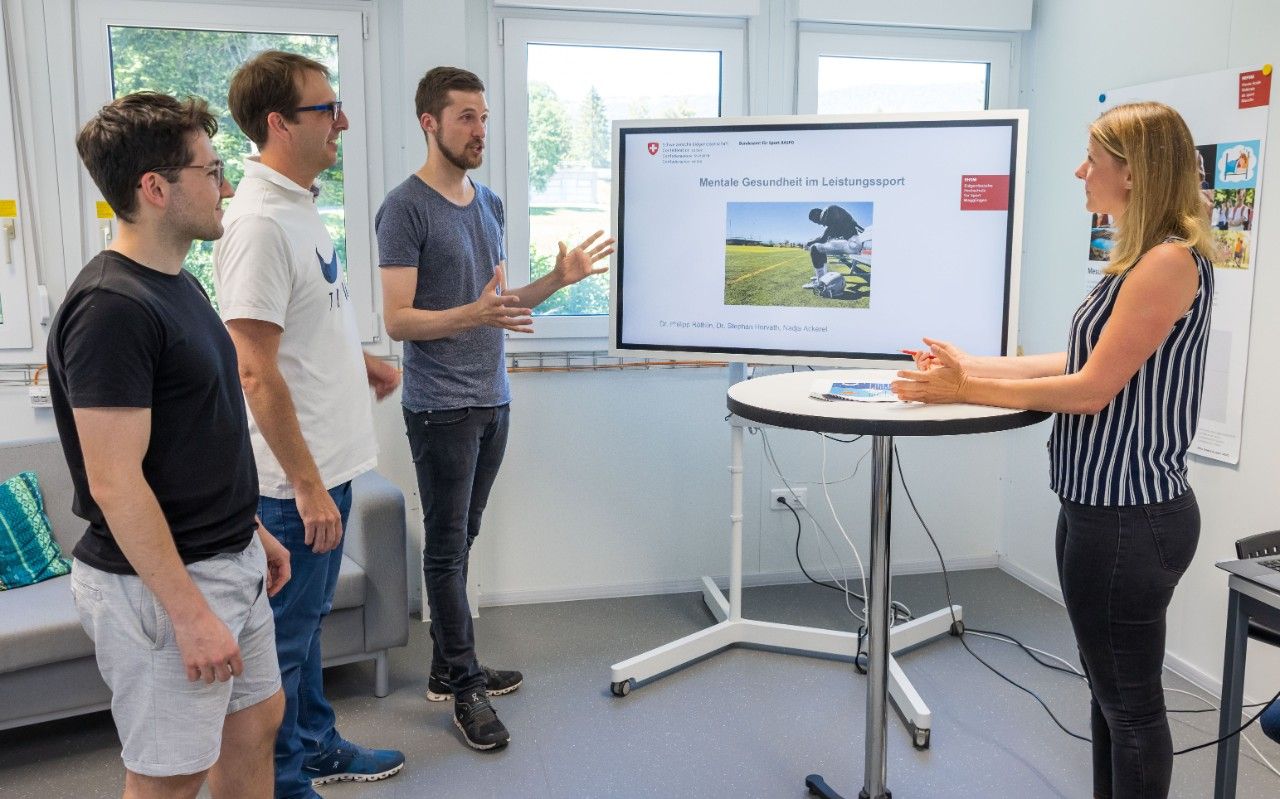
PR: There are three of us: Nadja Ackeret as a PhD student, Stephan Horvath as research assistant and myself as project leader. We can also call on the expertise of the entire sports psychology team at Magglingen at any time if need be.
Who is doing what?
PR: Nadja is collecting the data and will focus on the career transition from emerging athlete to the elite level. Stephan is organising the surveys of the sport governing bodies, while I'm coordinating and planning the overall project. As the communication paths between us are short, the exchange of information is optimal and we're working well together.
The project consists of six studies. How do they all fit together?
PR: The first and second studies will establish our knowledge baseline, and studies 3 to 6 will then take this further. Two studies will look at the career transition from emerging talent to elite athlete, and two at vulnerable phases or difficult circumstances in the personal lives of elite athletes which could affect their mental health, such as injuries and competing at major events. In all the studies we will investigate how the mental health of athletes is affected.
What progress have you made with the first study?
PR: We will have cleaned up and evaluated the data by the end of June, then our initial findings should be available in August.
How will your findings feed back into performance sport?
PR: Firstly we work closely with Sports Coach Education Switzerland: aspects of athletes' mental health are included in online courses for professional coaches. We also exchange information with our colleagues abroad: Andreas Küttel, the former Swiss ski jumper, is likewise doing research in this area in Denmark, which has led to one online colloquium already. We also have a few ideas as to how we can disseminate our findings among a wider audience too.
Many thanks for the update Philipp, we'll stay in touch!
Swiss Federal Institute of Sport Magglingen SFISM
Hauptstrasse 247
2532 Magglingen