

Studies Bachelor
The SFISM Bachelor of Science in Sports provides a solid foundation for a professional or academic career in sport. As the only university-level degree in sport, it covers both the theoretical and practical aspects of the subject.
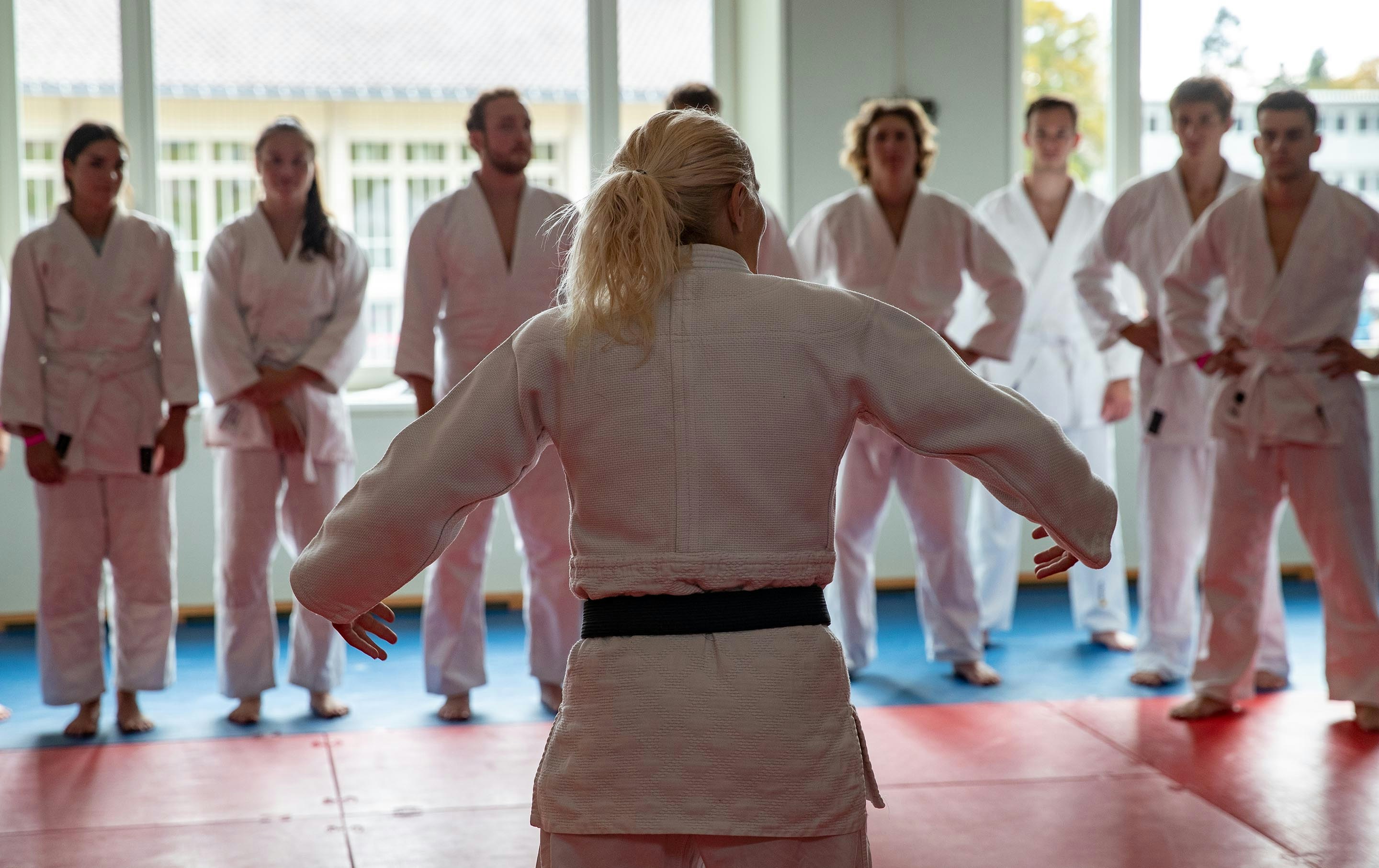
Redesign of the Bachelor's degree programme
The redesigned SFISM Bachelor’s degree programme is being launched in the autumn 2025 semester. The previous degree programme structure will be phased out after the 2024–2027 cycle has been completed. Students pursuing a degree in the old structure will have access to all the elements they require to finish their degrees as planned.
Structure of the degree programme
Over the course of six semesters, students acquire core competencies in sports science and practice, setting them up for a successful career in the field of sport.
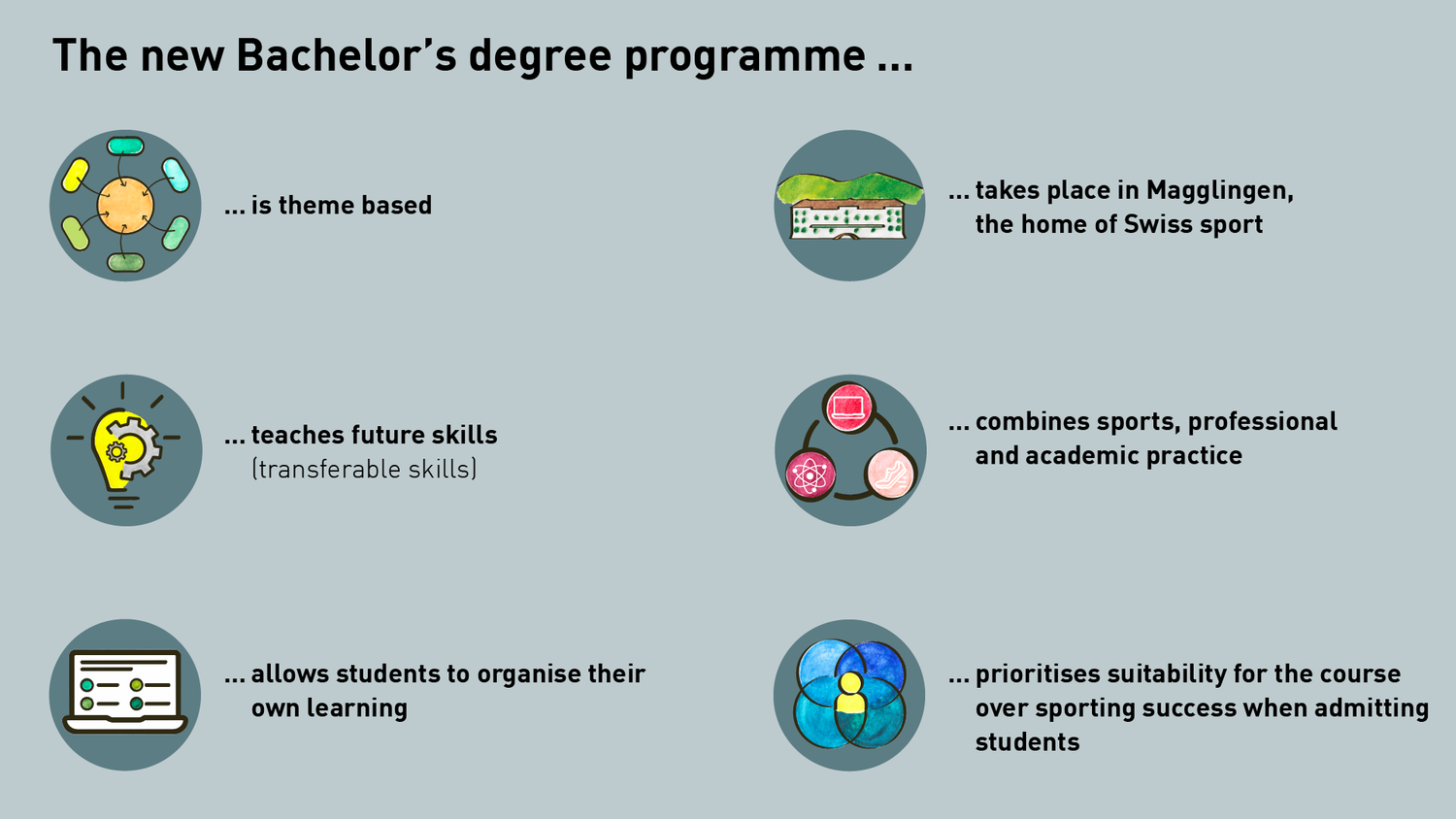
Study programme from 2025
Structure and content of Bachelor’s degree programme
The course seamlessly combines sporting, professional and scientific practice. The programme approaches these three areas as an interconnected whole, which is reflected in students’ learning and experiences on the course. Future-oriented interdisciplinary skills also play a key role.
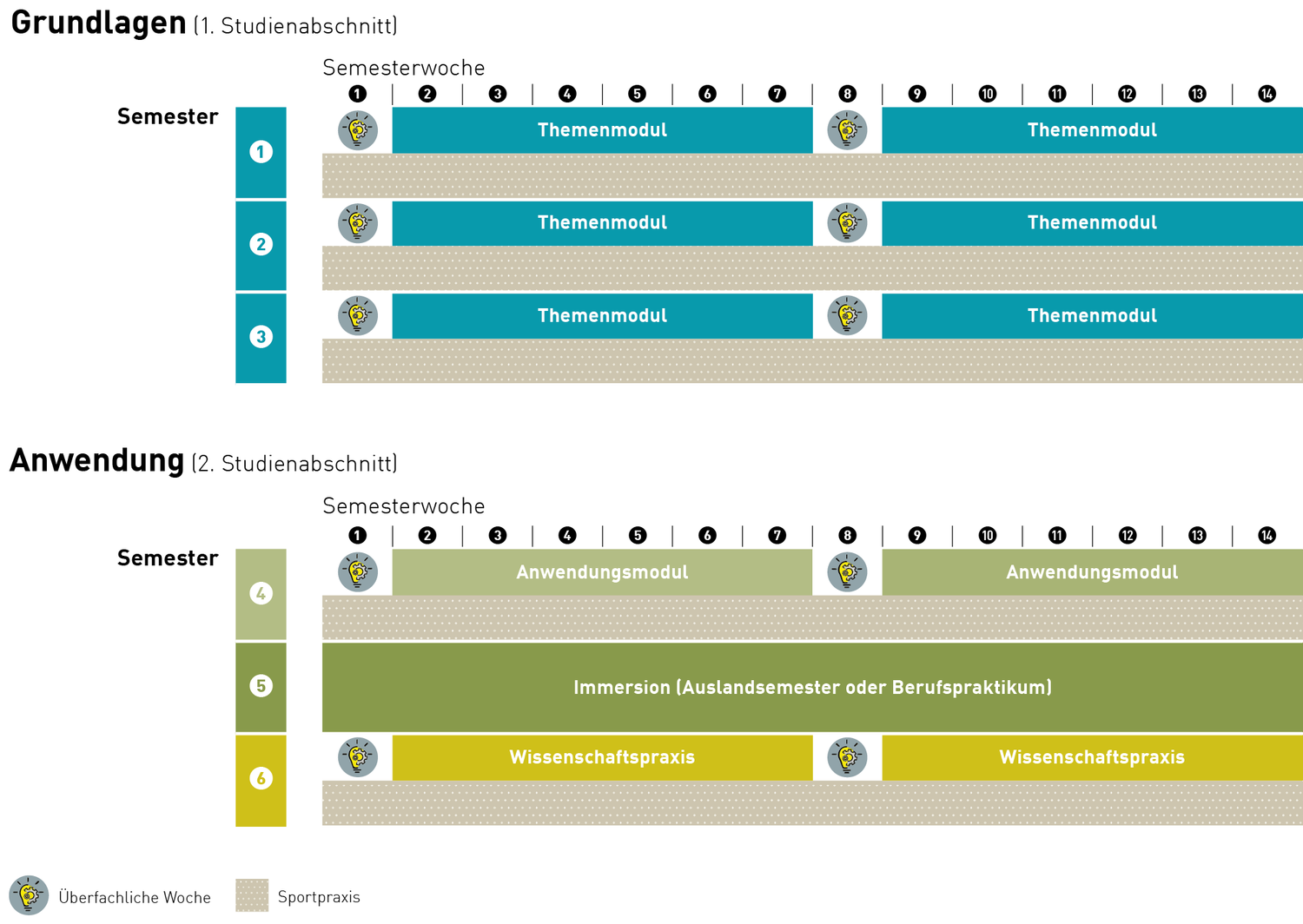
Foundations
In the first part of the course (semesters 1–3), students acquire important knowledge that lays the foundations for a future career in sports teaching, sports performance analysis or sports organisation. In addition to field-specific modules such as learning movements or human performance, there are interdisciplinary weeks that develop the future-oriented interdisciplinary skills that are essential for a successful career in sport.
Programme content
Semester 1 (autumn)
Semester 2 (spring)
Semester 3 (autumn)
Applying new skills
The second part of the course (semesters 4–6) teaches students to apply the new skills they have acquired. In keeping with a Bachelor of Science programme, students learn throughout their studies to work scientifically. They are trained to cultivate objectivity, deal with complexity and think independently and analytically. Students carry out their own scientific project in the sixth semester.
Sport in practice
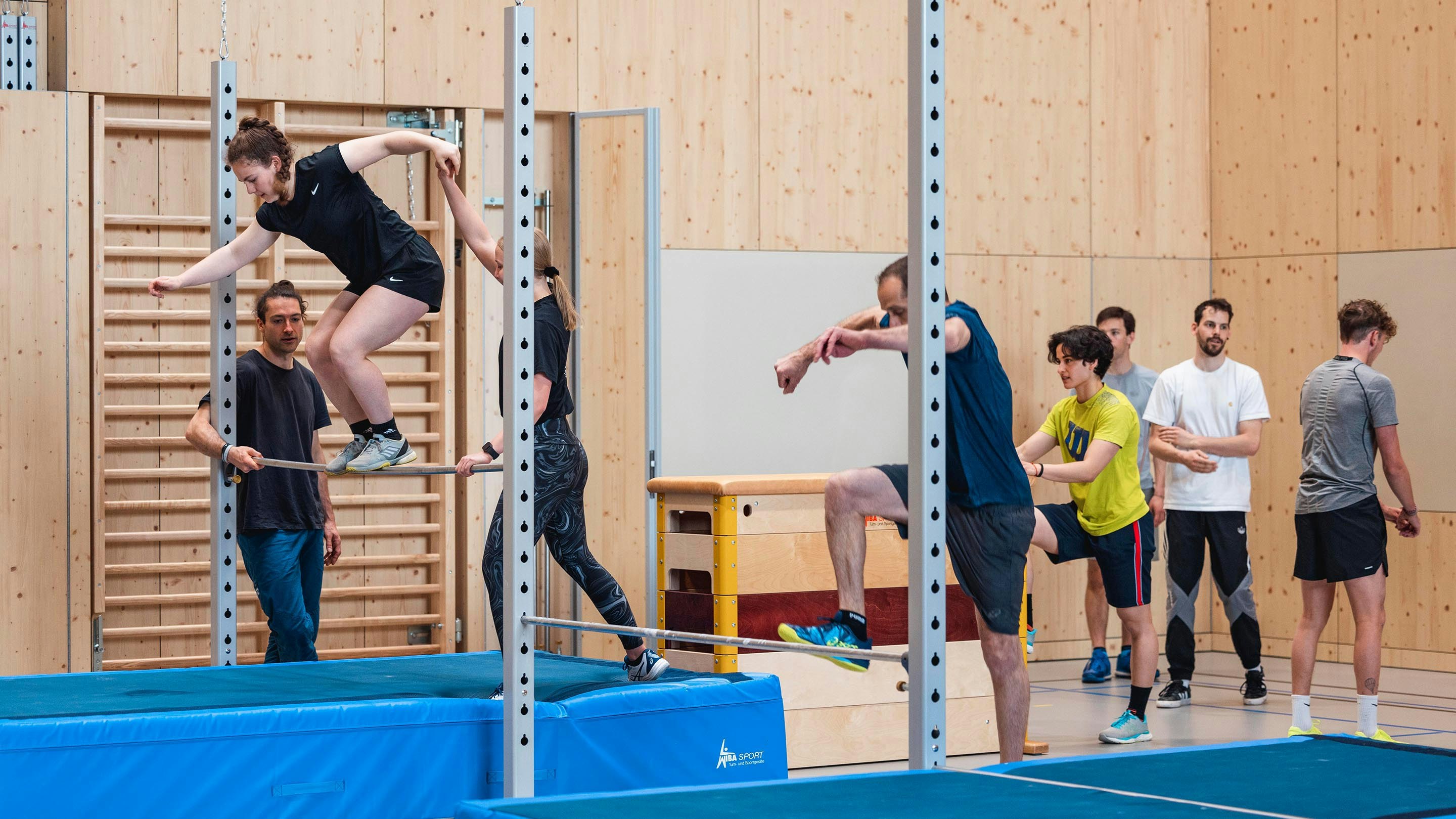
The entire degree programme places great importance on the practice of sports, i.e. learning and doing sports, which is taught every semester except the fifth. The practice of sports focuses on the following areas of sports and movement:
- Running, jumping, throwing
- Moving in water
- Moving on and with apparatus
- Creating, dancing, presenting
- Combat sports
- Invasion games
- Throwing sports
- Court sports
- Health and sport
- Outdoor sports
Immersion: apprenticeship or semester abroad
In their fifth semester, students undertake an apprenticeship. This provides a valuable opportunity to gain work experience and deepen their understanding of the practical aspects of sports science. Students can also grow their networks, and it is not uncommon for an apprenticeship to lead to job opportunities. Alternatively, students can choose to experience other cultures and broaden their horizons by studying abroad for a semester.
New: online self-assessment
Are you interested in the SFISM Bachelor’s degree programme? An online self-assessment (currently only in German) will help you to get a clear picture of the desired degree programme and to check whether your expectations match the programme content and requirements. It takes about 20 minutes to complete.
Full-time and part-time study
The Bachelor's degree programme is equivalent to 180 ECTS credits and takes six semesters for full-time students. The course may also be taken on a part-time basis over a maximum of 12 semesters. On application, this may be extended by a maximum of four semesters (cf. SFISM Ordinance, Art. 23).
Teaching languages
The course is taught in German and in French. Students are expected to be sufficiently competent in both languages, As a guide, students should be competent to the following language course levels:
- Goethe Zertifikat B2 for German
- DALF B2 for French
More
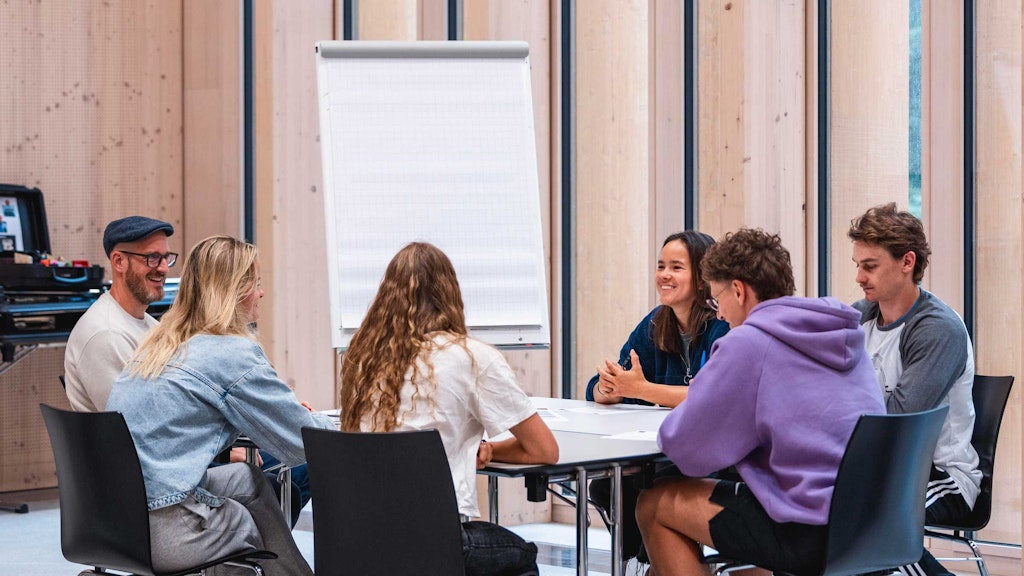
Student association – participating in the further development of the institute
At the SFISM, students have the opportunity to play an active role in the further development of the institute. Whether in teaching, quality assurance or strategic processes, the student perspective plays a vital and valued role at our institute.
Equal opportunities
SFISM's Equal Opportunities Officer deals with all equal opportunities matters at the university.

Sports media library
The media library in Magglingen develops and disseminates media on different sporting disciplines and relating to sports science.
Student advice centre
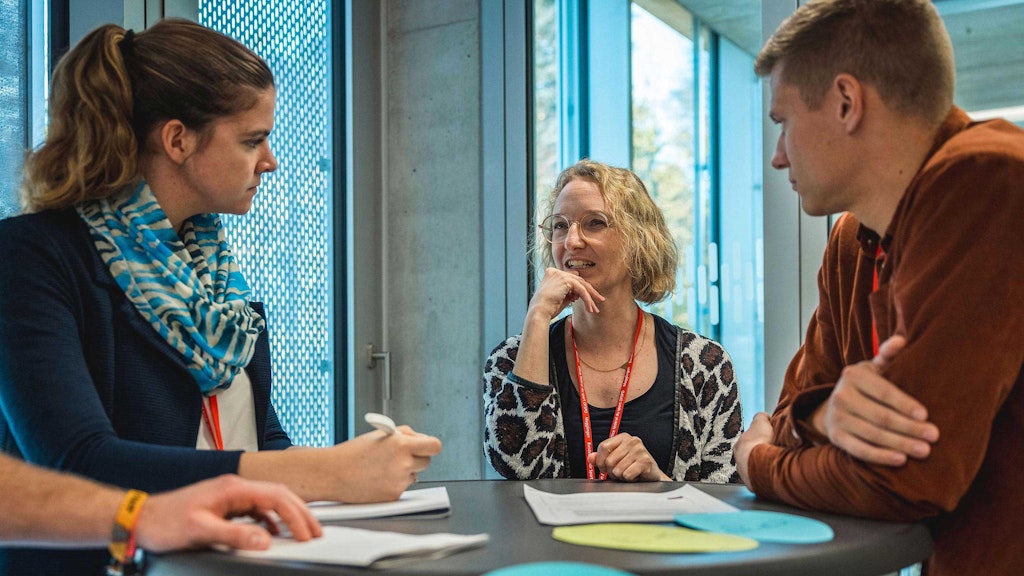
Students at SFISM have access to two advice centres for questions relating to their studies, finances and career planning.
Student internships
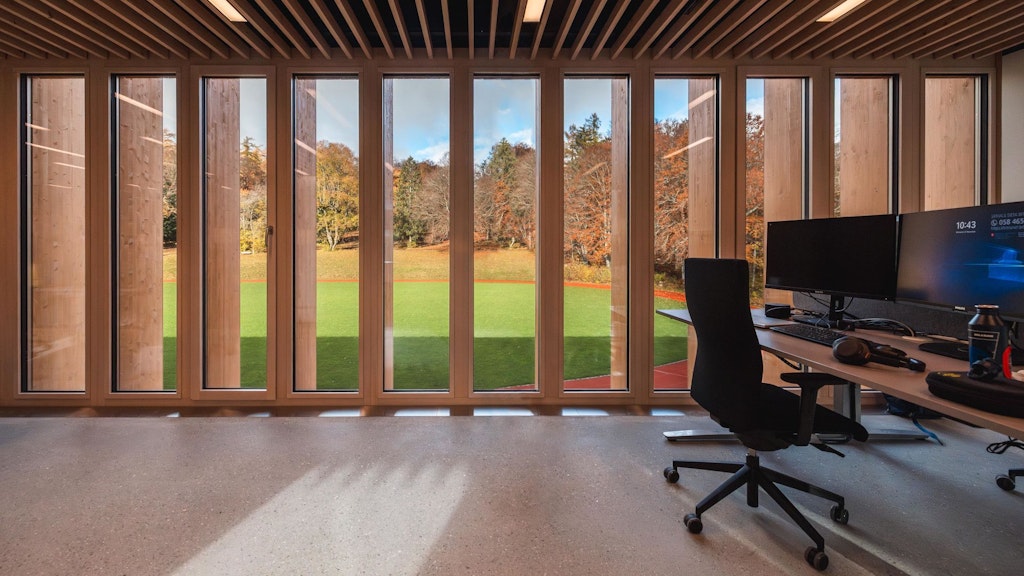
SFISM offers student internships in different areas of activity.
Hochschulsport
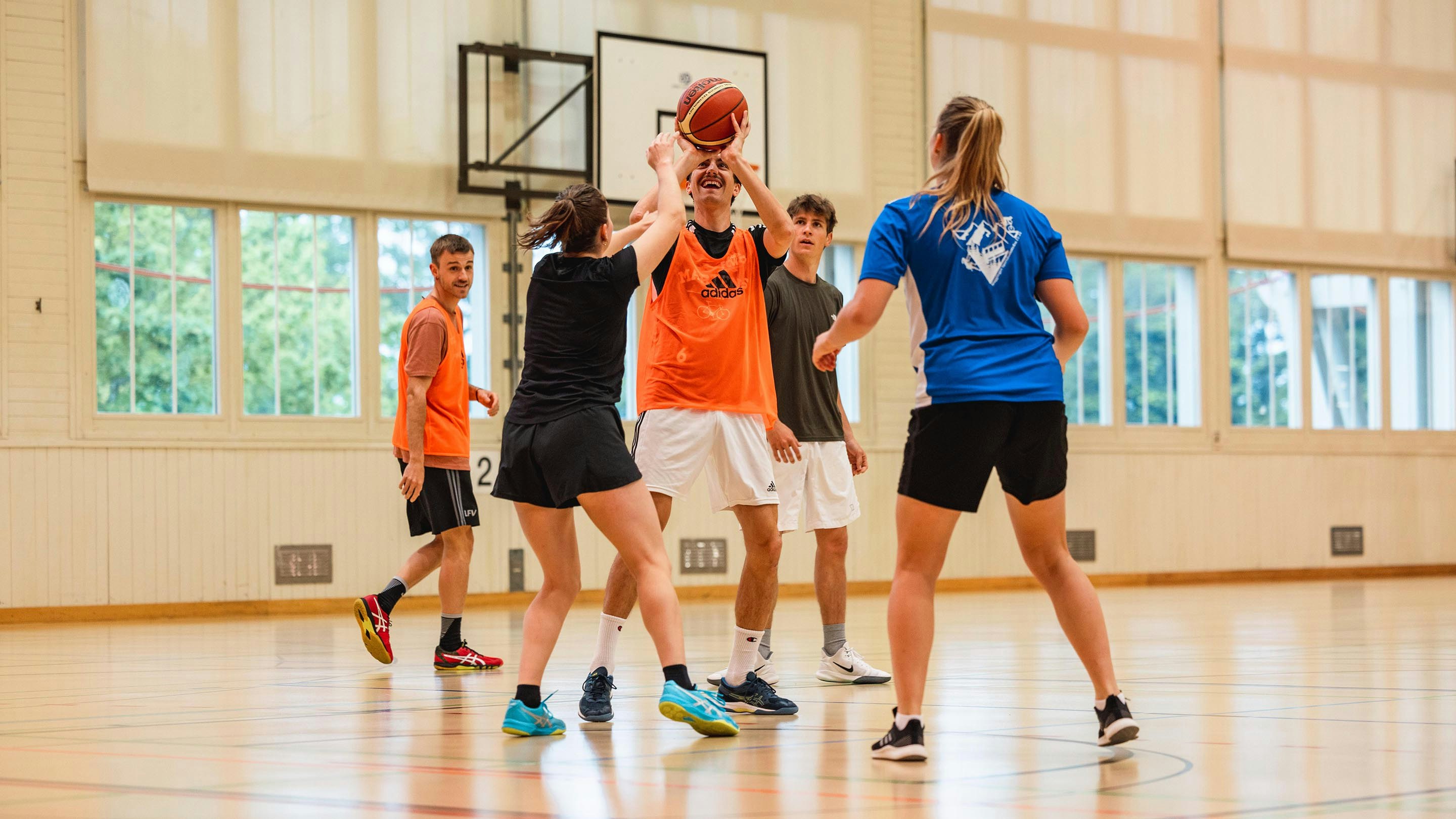
Studierende und Mitarbeitende der EHSM nutzen attraktive Trainings, Kurse und verschiedene Spielturniere sowie den traditionellen Sporttag der BFH «The Games».
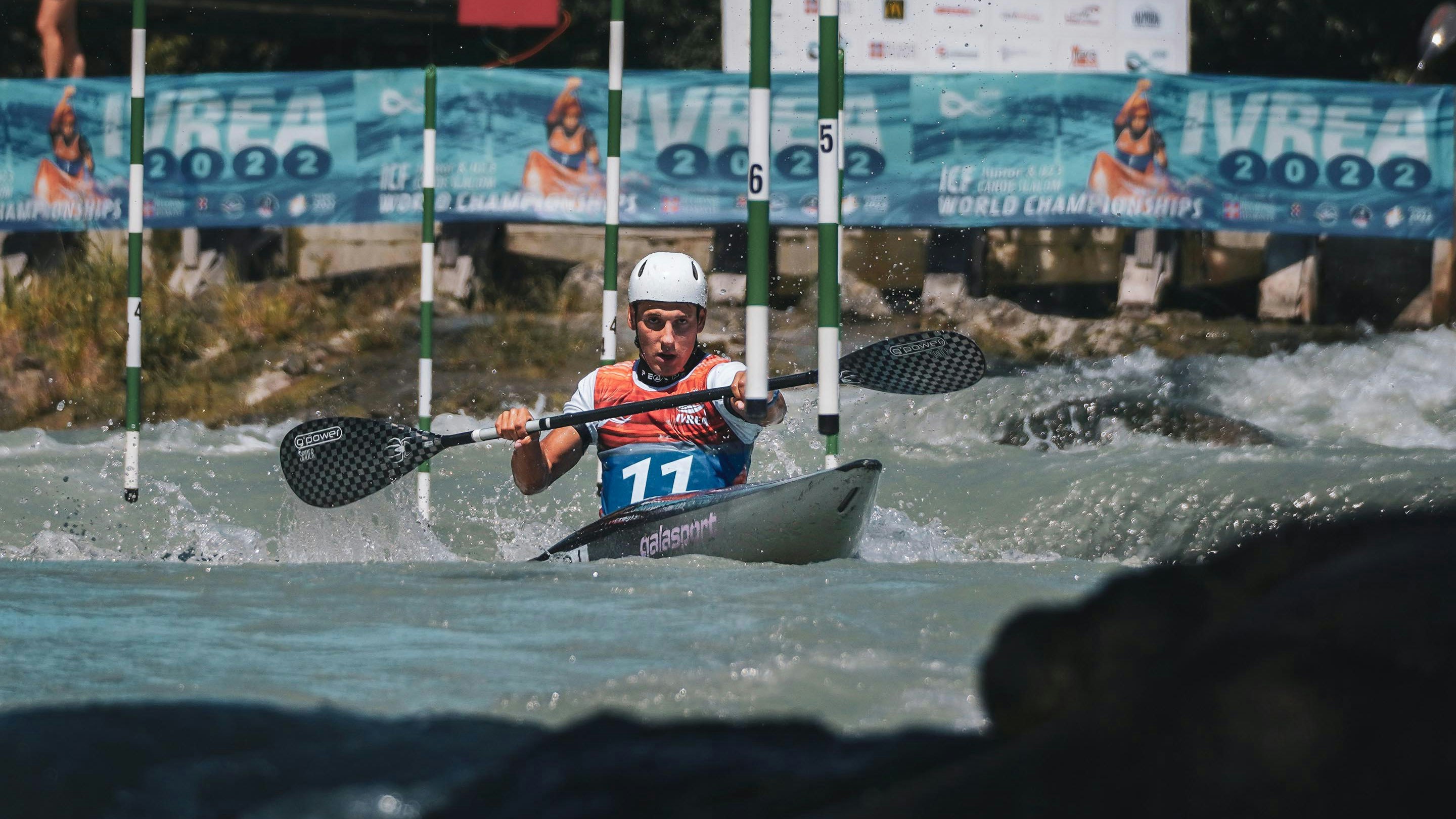
Studying and elite sport
The SFISM offers elite athletes parameters which make it possible to successfully reconcile the demands of studies and elite sport.
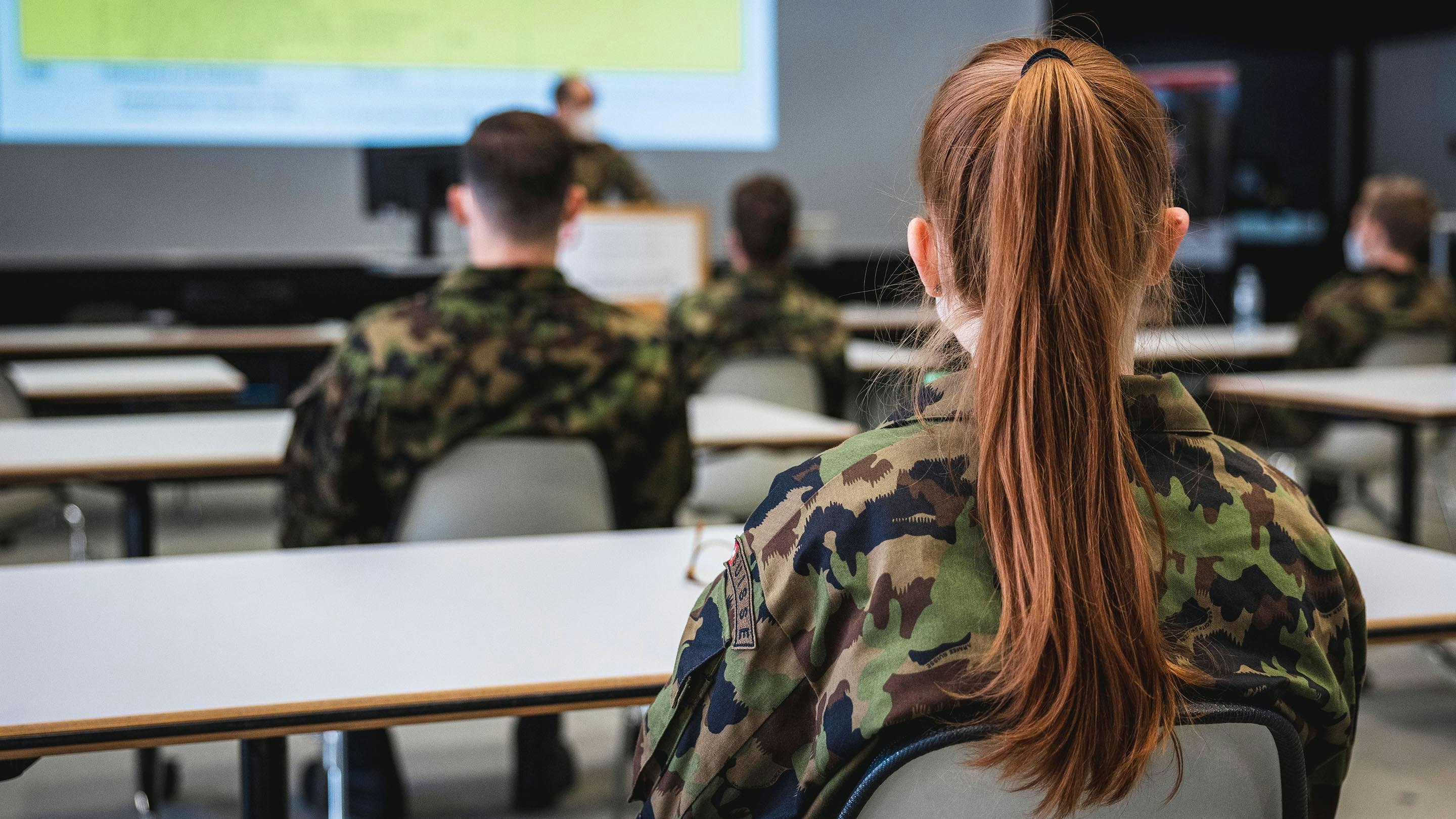
Studium und Armee
Die Studierendenberatung EHSM hilft den dienstpflichtigen Studierenden, das Studium und den Militärdienst (Rekrutenschule, Kaderschulen, Wiederholungskurse usw.) möglichst gut aufeinander abzustimmen.
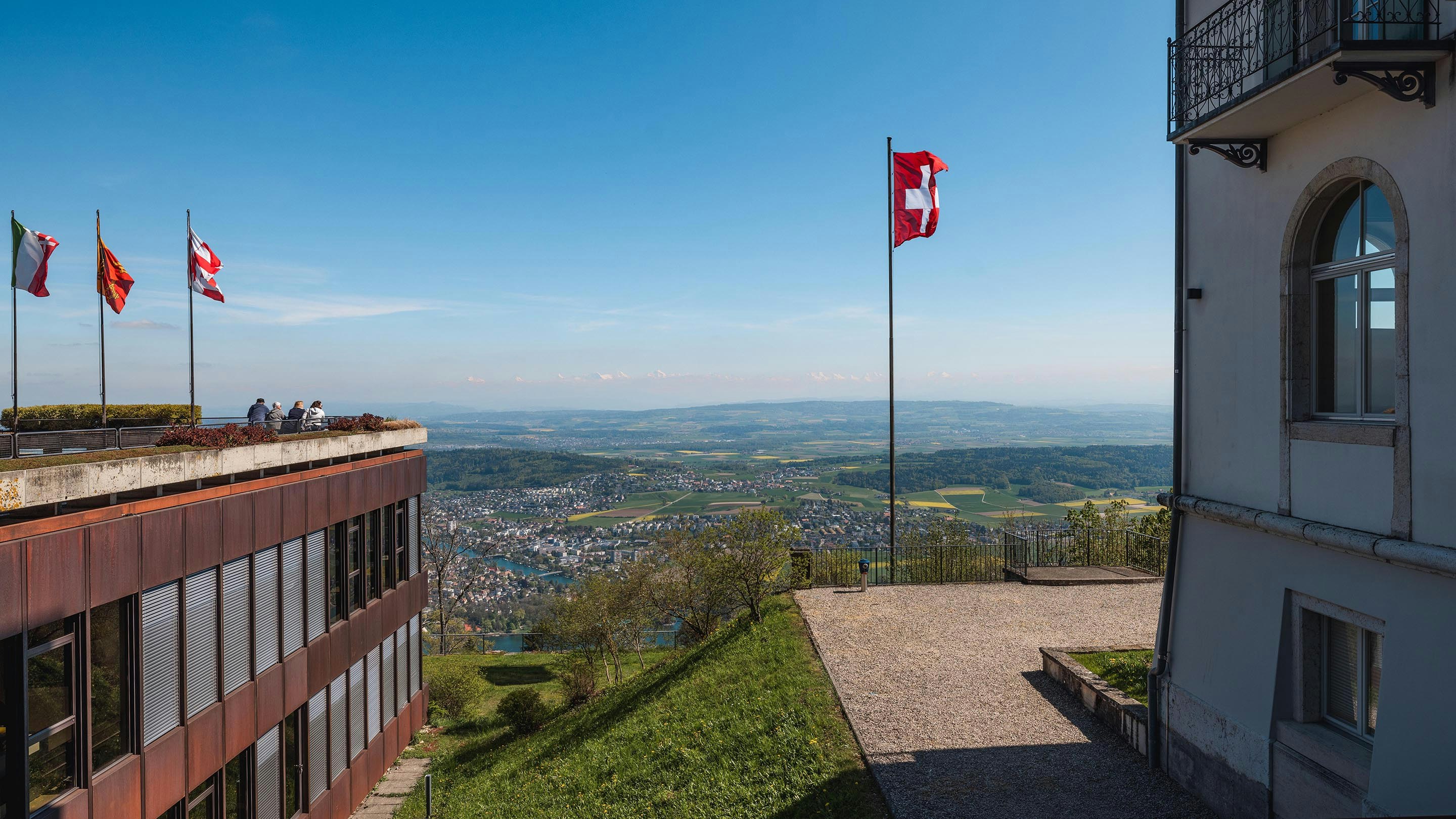
Statutory framework
This page gives an overview of the statutory framework for SFISM's activities plus the university's rules and regulations.
Swiss Federal Institute of Sport Magglingen SFISM
Hauptstrasse 247
2532 Macolin